Having been highly impressed by Will Beierwaltes’ article in the Winter 2023 edition of Old Toy Soldier, I hoped that I would be able to add something to it, purely because I was lucky enough to have become friends with Jan and Frank Scroby during the period that they embarked and prospered as the first of the many who became known collectively as the New Toy Soldier manufacturers. As far I was concerned, it will always be remembered as ‘The Blenheim Era’ that immediately preceded my cataloguing career, which started at Phillips, London in 1979.
My plan here is to go through the Waterloo troops in some detail, as they haven’t yet ever had a proper full colour outing, and then to recount how I was able to participate somewhat in their brave venture.
I first met the Scrobys at their new stall in the Red Lion Arcade in Portobello Road, number 77. It was the summer of 1973, and they were trying out their idea of of becoming dealers in old toy soldiers, already under the banner of Blenheim Military Models. I had a chat with them, and discovered that they would very much welcome additional stocks if I was able to let them have them on sale or return. I was looking for ways to sell off duplicates in my own collection at the time, and so on my next visit brought some sets on which I thought they could make a decent profit. This arrangement ensured that I came back frequently to see what they had managed to sell, as well as to see if they had anything I wanted to buy.
It only took Jan and Frank a few months of trading to discover that with prices for old toy soldiers going up, it was difficult to obtain the stock they needed to keep going. They had joined the British Model Soldier Society and attended meetings, and at some point during the autumn they decided that the best way to ensure a steady flow of income was to make toy soldiers of their own to go with the original old toy soldiers they were already selling. This was not a new idea, because Britains had already come to the same conclusion. The difference was that Britains were going into mass production for the London souvenir market, with figures priced at 10p each, while the Scrobys were going to offer their product as figures with which adults could complement their existing collections at 50p, five times as much.
Saturday 26 January 1974 was the day I turned up at the Scroby’s stall and they proudly showed me their first figure, the British Waterloo infantryman. I thought they were well worth the money, and bought twenty-five of them. Of all the Blenheim figures, these first four Waterloo models, the British Infantryman, the Imperial Guard Grenadier, the Gordon Highlander and the Rifleman were the most compatible with Britains. They were designed to complement the Britains Waterloo range, being marching at the slope where the Britains were at attention with shouldered arms. Inexpensive opposition was provided in the form of the Imperial Guards, whereas Mignot were relatively inaccessible and pricey. Unfortunately, most collectors of toy soldiers majored on Britains toys in the form of late Victorian and Edwardian period British Army rather than 1815.
The next fixed point in time in the Scroby saga is March 1st 1974, being the date when the first set in the Nostalgia Models series was issued by Shamus Wade. Even if they were pretty much ready to go with all four of the first version Waterloo figures, it would only be less than five weeks before the issue date from when I had been talking to them in January. I can only assume that the 15th Ludhiana Sikh figure that was to be the second Nostalgia set was already well advanced and that the arrangements for the Nostalgia contract were concluded incredibly quickly. It could be that Frank had cast quantities of them and already attached arms at the trail (which for simplicity’s sake Shamus decided not to take). Shamus was in a hurry to get Nostalgia started before anyone else realised that this was the ideal way to distribute a series. If it all worked like clockwork, it truly was a win-win situation for both sides.
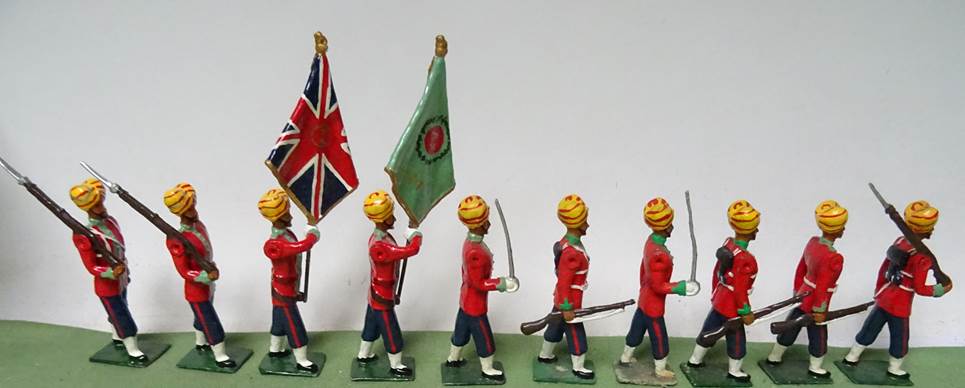
Jan and Frank had decided that they would branch out into troops of the British Empire, and all I can say is that I acquired a fair bunch of the new Ludhianas at the time, including ones at the trail, some finished at my request in matt paint, in which they still looked just as good, and some of the ones at the slope without quoits. Since then, I have added to the Nostalgia ones and altogether now have sixty-four of them, the largest Indian Army contingent in my collection. They are contenders for the most beautiful figures ever produced by Blenheim or Nostalgia, wearing the iconic uniform of the regiment, beautifully painted by Jan or one of her few London painters. The heads are not yet swollen out of proportion by the exigences of the detailing Shamus wanted to cram onto them. The intricacy of the straps on the ones in full kit is quite a wonder to examine.
It may even have been that the production and sale of the Waterloo Gordons and Rifles were set to one side to ensure that the first issues of Nostalgia went out on time – I assume also that the issue date given would be the date upon which Shamus’s sales lists were dispatched, giving some leeway before the telephone or postal replies would be coming in, and allowing a period for packing and shipping, though even then it would have to have been a tightly run process. After the first two Nostalgia issues, Shamus sent out two new units on every mailing list, for a total of seven issue dates in 1974. No wonder slaving over a hot stove gained a new meaning for Frank.
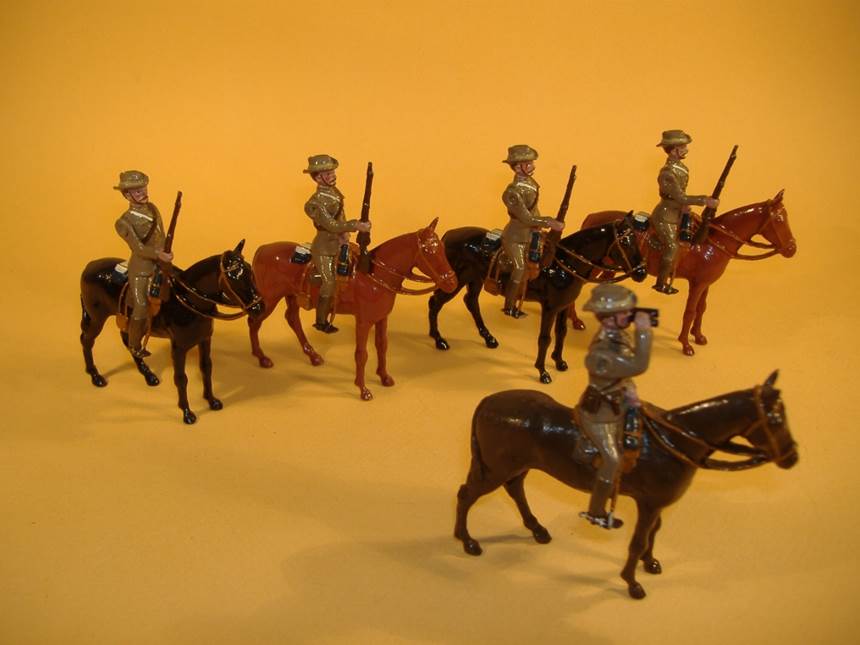
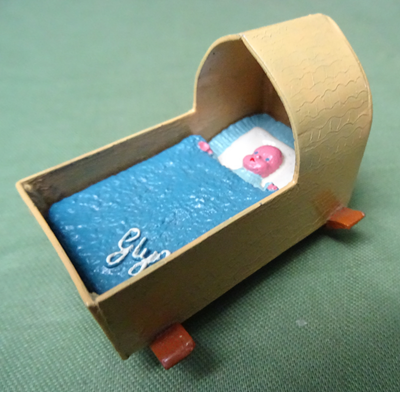
Even so, the Scrobys were able to issue the other three Waterloo figures, start work on what they hoped would be the first of their Victorian British Army as described in Will’s last article and even designed and produced their first cavalry, the Imperial Yeomanry. I loved this figure, with its promise of Boer War figures to come, and always thought it was one of Jan’s most successful creations. I had two officers and four troopers, and always regretted that someone made me an offer I couldn’t refuse for them, (I did at laest keep the spare officer). The Scrobys had loyally continued to appear at their Portobello stall right through 1974, although tucked away at the back of the Red Lion Arcade (an old converted pub) it had never been a great position. The miracle was that the move to Wales in January 1975 was planned and organised, as it must have been, well before the end of 1974, with Nostalgia production still going at full throttle, and having presumably delivered the first two issues of 1975, dated at January 6th, before the move happened. By that time, Jan would have realised that she was pregnant with her son Glyn.
The move to Wales and the upping of the Scroby game, training new staff and Glyn’s arrival on 29 June 1975 would have been enough in anyone’s life without the added burden of how to organise a retail launch of Blenheim boxed sets three-quarters of the way through that year. Not only were they doing this, but were engaged in producing the massive task of the Princeton Battlefield Area Preservation Society thirty-nine piece set, as well as my rather more modest Chinese commission.
It was at this point that I tried to give them a helping hand by designing a box for them that would act as protection for six foot figures or three cavalry (I think I still have the prototype somewhere) basing the insert card on the one used by Britains in the 1930s, with slots to take the marching troops. It was now that the various figures developed in London for the Blenheim range were given set numbers for the first time. I commissioned a commercial artist acquaintance of mine to copy a famous painting of the Duke of Marlborough as a line drawing to form the black on gold label for the boxes, and bingo, Blenheim was in business.
Not that this did not involve considerable extra work on the production side, though by now the Blenheim factory was able to take on more capacity. The Waterloo models were given a complete makeover as I suggested, with longer bayonets and larger packs, and Officers, Colour bearers, Eagles and Buglers were added appropriately so that each type could be made into two boxed sets. It is true that Jan overdid the stripes on the Gordon Highlanders, so much so that the Welsh painters refused to copy her delicate work, as one can see in the comparison in the picture. Jan solved that problem by switching the casting to Black Watch production, thereby adding two more sets to the Waterloo range. Six of the Waterloo sets lasted until the end of 1977 before they were withdrawn.
I was sent a consignment of five hundred of the boxes to start my London sales campaign, so that I could make them up into the various sets on demand, simply by filling the box with the correct contents (also delivered to me loose), sticking the generic label on the top of the box and a blank offcut from the label on the end of the box where I would write the set number and the description of the set in my best block capitals. Then I would take samples round to the various places where I thought I could sell them. These included Hamleys, Hummel’s in Burlington Arcade, John Teychener under the Charing Cross Arches, James Luck in Southgate, Geoff Warner in Kingston, Tradition in Mayfair, Under Two Flags off Oxford Street, Soldiers Soldiers in Lambeth, and myself at the BMSS and through my postal sales list. Given that I had a busy full-time job and a young family (as well as continuing my collecting activities) it had to be done fairly slowly and sometimes at intervals. Probably the most valuable part of it was in publicity.
Right at the start, in October 1975, all I had to offer was the revamped second versions of the Waterloo series, Coldstream Guards, Imperial Guard and Gordons, a total of six sets in all. In late January 1976, these were joined by running 24th of Foot, Gloucestershire Regiment and Royal Marines. In February came the dismounted Westminster Yeomanry, in April the Zulus and in May the Waterloo Riflemen, 2nd version and the dismounted 16th Lancers. June saw the arrival of the Queen’s Bays mounted. In August the Waterloo Imperial Guards had run out, and the Waterloo Gordons had been replaced by the Black Watch. The introduction of Blenheim to the world seemed to be going well, and by and large relationships had been set up between Blenheim and all the London outlets, so by mid-1977 I no longer needed to visit all the outlets, and simply did the occasional special event such as putting in a window display of the Trooping of the Colour in a shop window opposite Hamleys in Regent Street.
The period during which Blenheim was operating was when inflation reached its highest rate since the Second World War. Blenheim figures started out at 50p each. Two months later, Nostalgia figures were 75p each and a year later Blenheim retailed at £1.25 each. In February 1976 a boxed set of six would sell at £8.00, four years later, including the recently introduced VAT, the same box would cost £16.50. The price of tin went up by more than 300% from 1974 to 1980. By comparison, from 1973 to 1983, Britains Metal Models went up by 1,000% from 10p to £1, although at the outset they were likely to have been underpriced.
My relationship with the Scrobys remained cordial right until the end of Blenheim. In 1978 we went to see them in their Welsh valley with their house two feet below the level of the adjacent stream, and Elizabeth, my daughter, remembers playing with Glyn while we adults discussed important and unimportant things among those incomparable fresh emerald slopes and soft green trees over the waters. I cannot imagine them ever regretting having made the move. When Blenheim went bankrupt, they sold me their remaining odds and ends of figures, 600 of them, including painting samples for the Salvation Army, Buffalo Bill and the Iowa State Trooper. After that, I fear I neglected them, although I knew that they had made another success of Marlborough. They probably knew how to organise things better with their Blenheim experience under their belts, and they always seemed to be too busy to come to shows. I will certainly never forget them.
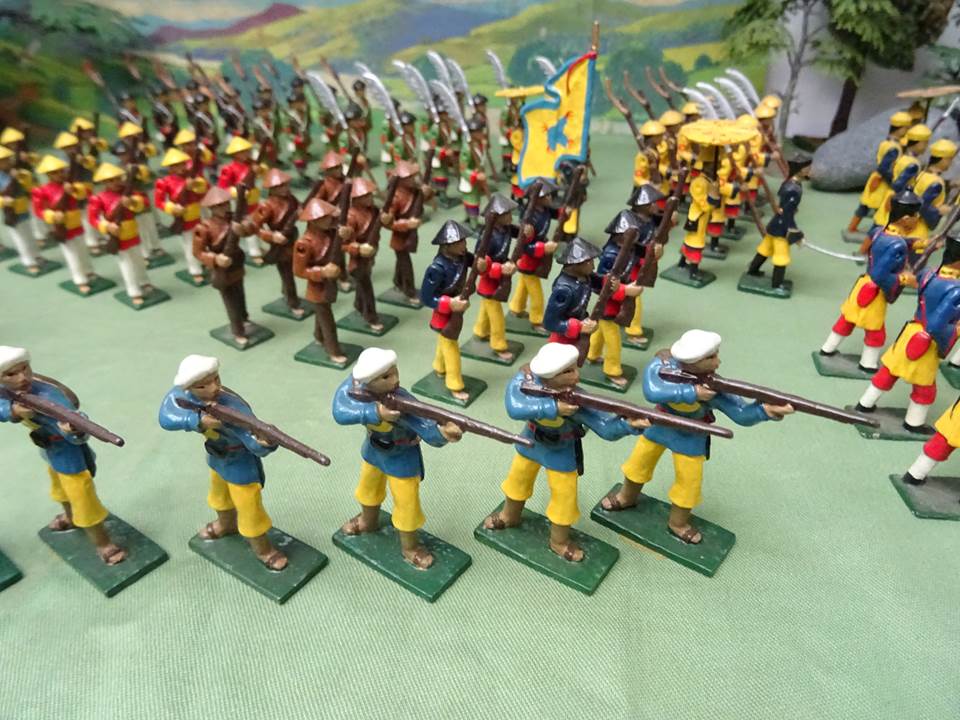
It seems crazy that the fiftieth anniversary of the origin of ‘New Toy Soldiers’ passed by without too much fuss, and that I am now celebrating (at the time of writing) the enjoyment of the Chinese the Scrobys made for me exactly fifty years ago. I remember unpacking the first consignment as if it was yesterday – one hundred Manchus and fifty Chinese Levies in May 1975.
Illustrations:
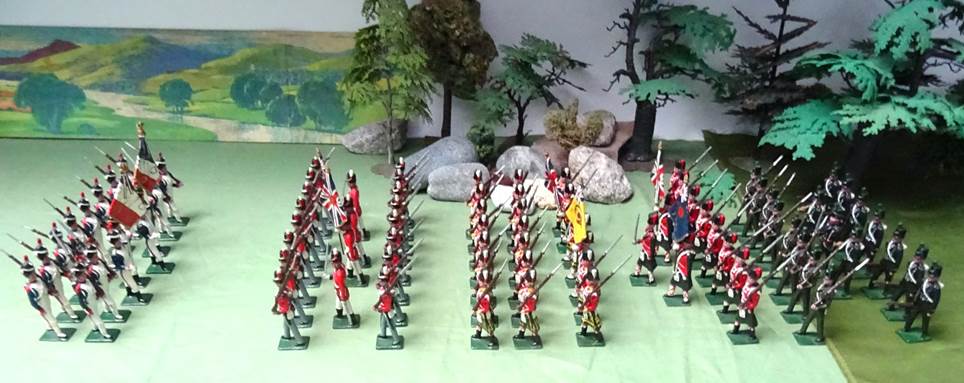
- An array of the Blenheim Waterloo sets, with the first versions to the left of the second versions. The first versions were planned, and some made, in 1973-4 during December and January. Production ceased once each had been offered at the Portobello stall and sold out. All four of the first versions were marching at the slope infantry, right foot forward and without any officers, colours or buglers.
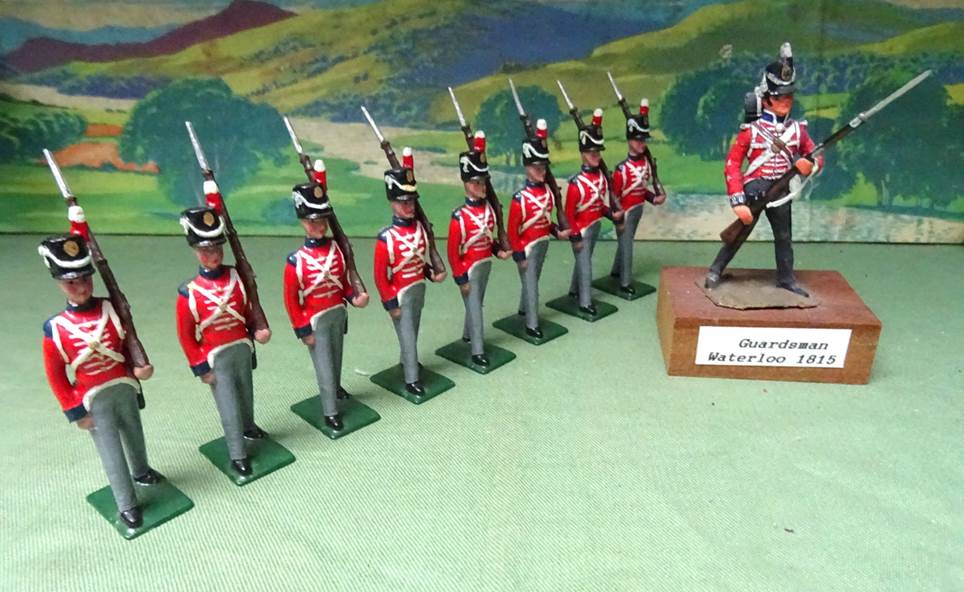
2. The very first Blenheim figure, the marching Waterloo British Guardsman, compared with a 54mm model (by Stadden or similar maker). The bayonet looks really short compared to that wielded by the model, and the musket is also too short, but they possess the wonderful doll-like quality of the toy style.
3. The first version Guardsmen compared with the splendour of the second version, on sale from October 1975, complete with Officers and Colours, sets B1 and B2, Coldstream Guards 1815.
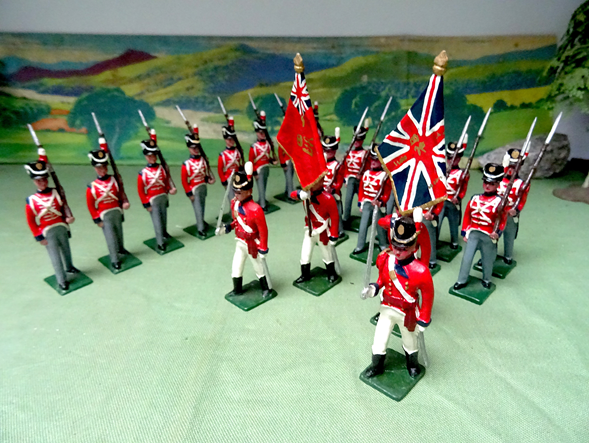
4. A proper all round comparison of the first and second version marching guardsman. The bayonets and scabbards have been lengthened, and the packs somewhat enlarged. The musket has not been lengthened nor is the pack at a realistic size, but the overall effect seems to me better, though they are less toylike.
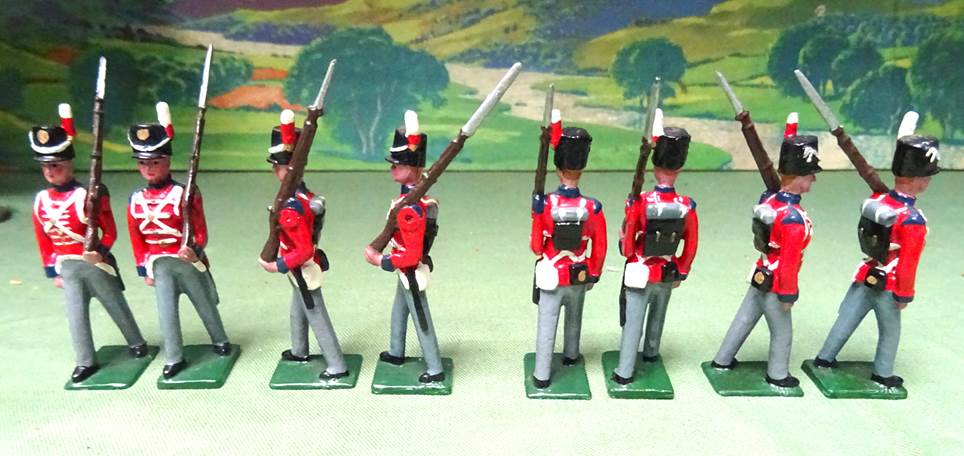
5. The first and second versions of the Coldstreams march together.
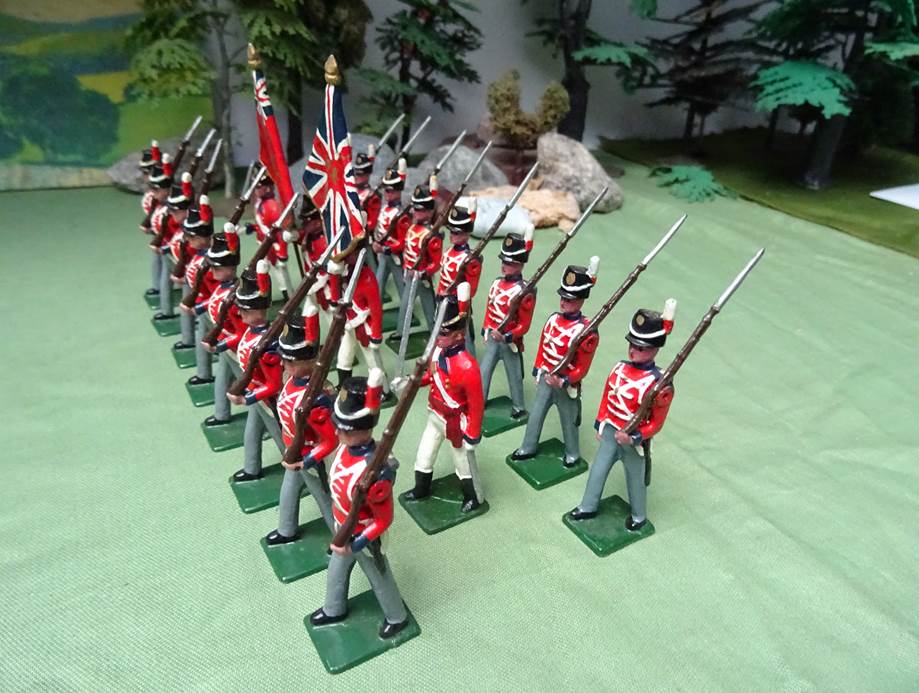
6. The first version of the Gordon Highlanders.
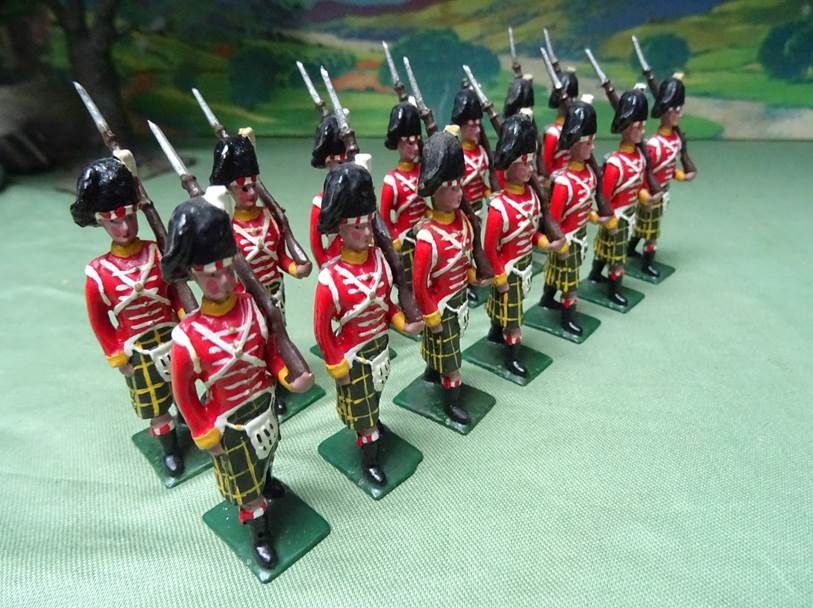
7. Comparing the Blenheim Gordon with a later Britains ‘Redcoat series’ 1815 Gordon. Allowing for inflation, the 1974 Blenheim figure, costing 50 pence then, would have cost £10 today. The Redcoat is about as realistic as one could get and still be in a gloss toy style. It retails at around £20.
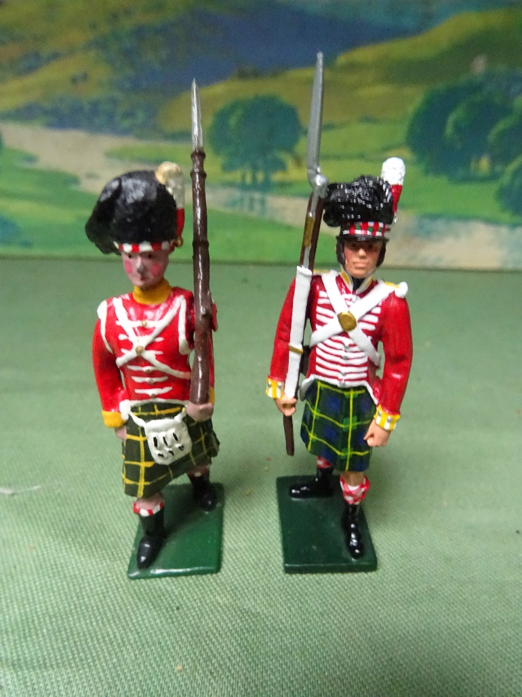
8. The all round comparison of the first and second version Gordons, with the first version on the left of the second. This picture shows some of the problems of painting Gordon kilts. I think Jan followed the line of the pleats in the kilt on the first versions. Clearly the painters trying to do the kilts of the second version are struggling to be neat. The yellow lines are overwhelming the background. Not to worry, switching to Black Watch will be much easier.
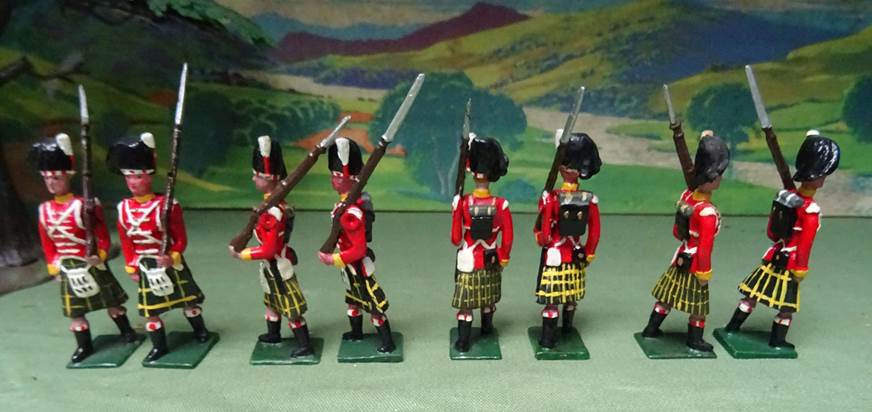
9. A parade including the Britains Waterloo infantry at attention that probably inspired the Scrobys to create their similar marching troops. I like the overall effect, but it does point up the small size of the Blenheim packs. The Blenheim highlanders were given sporrans, whereas on campaign at Waterloo, as Britains and Imperial knew, sporrans were rarely worn. On the other hand, the colours borne by the Imperial colour party look about two foot too large.
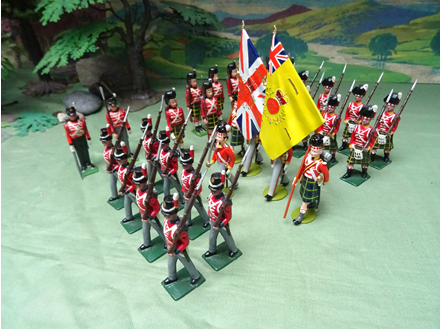
10. First version Blenheim alongside Britains Waterloo sergeants.
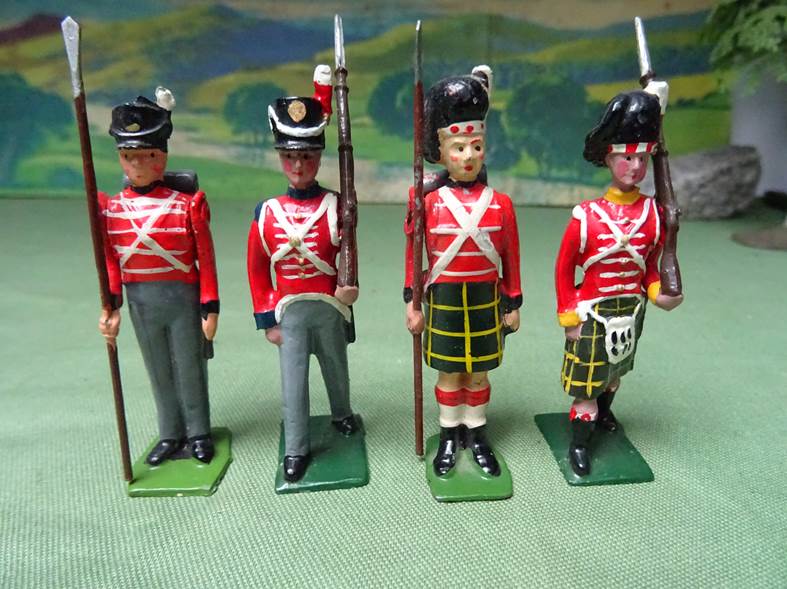
11. The new Black Watch solve the painting problem. There was no first version. By February 1976, four months after the Blenheim retail launch, the second version Gordons had gone, replaced by the Black Watch.
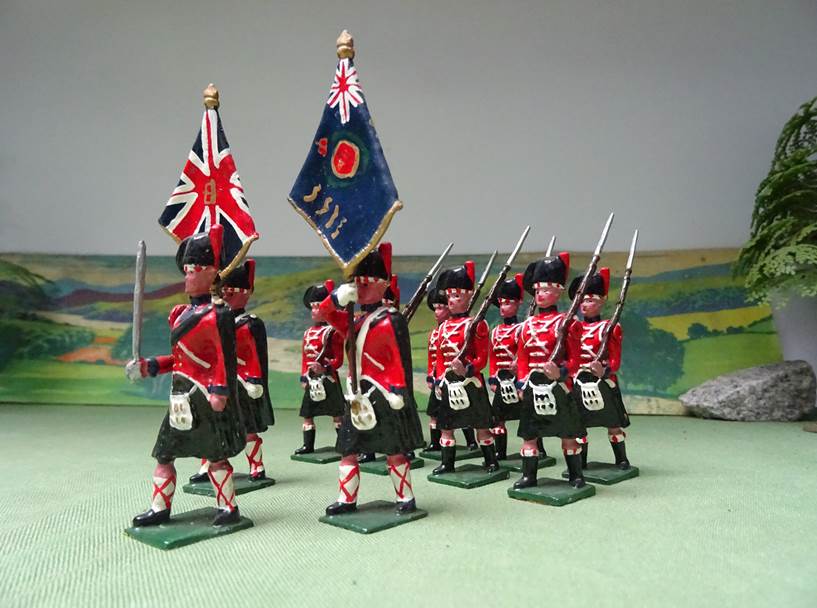
12. The two highland regiments together make a brave sight.
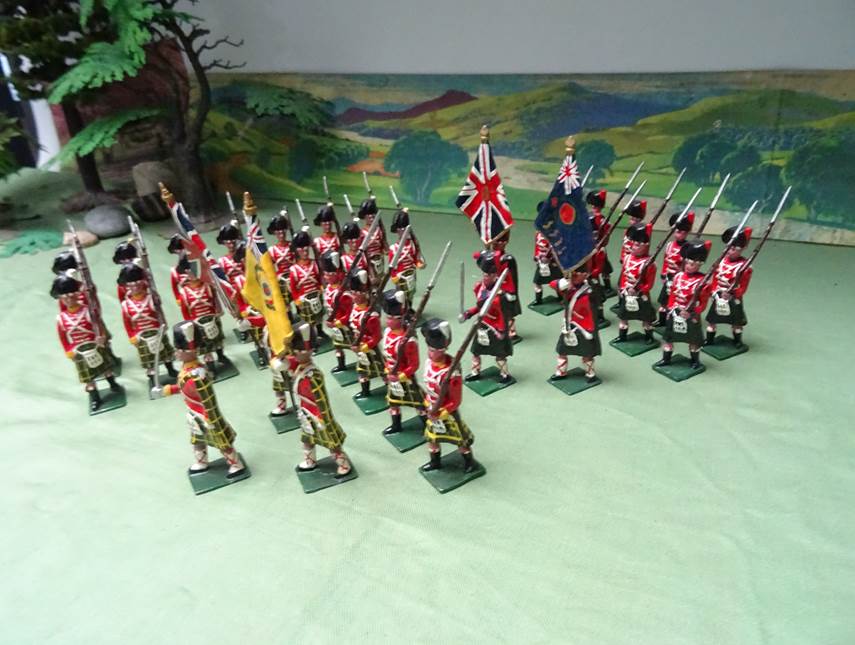
13. The Waterloo collection is starting to look impressive.
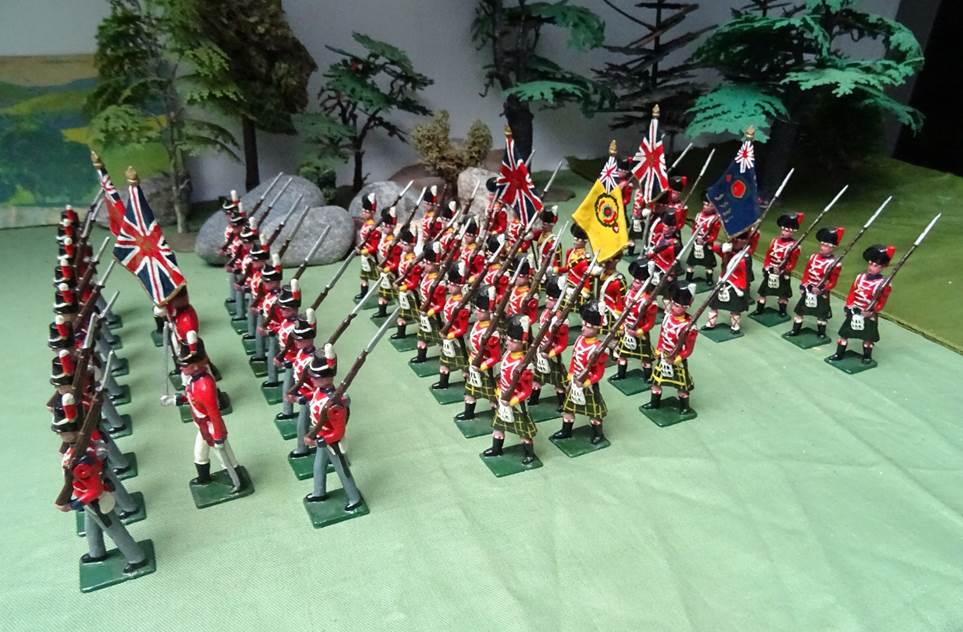
14. The third British Waterloo figure was the rifleman marching at the slope.
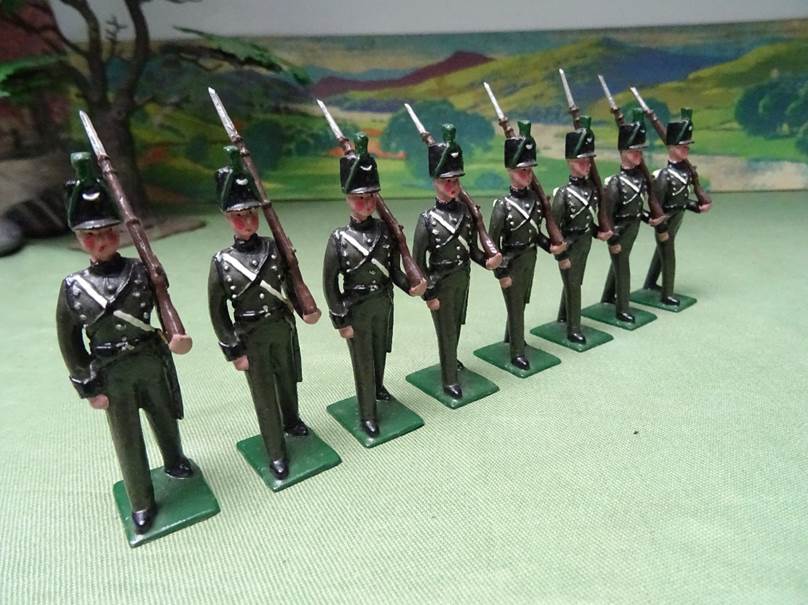
15. Nothing could be more different from Blenheim than a Thomas Gunn rifleman.
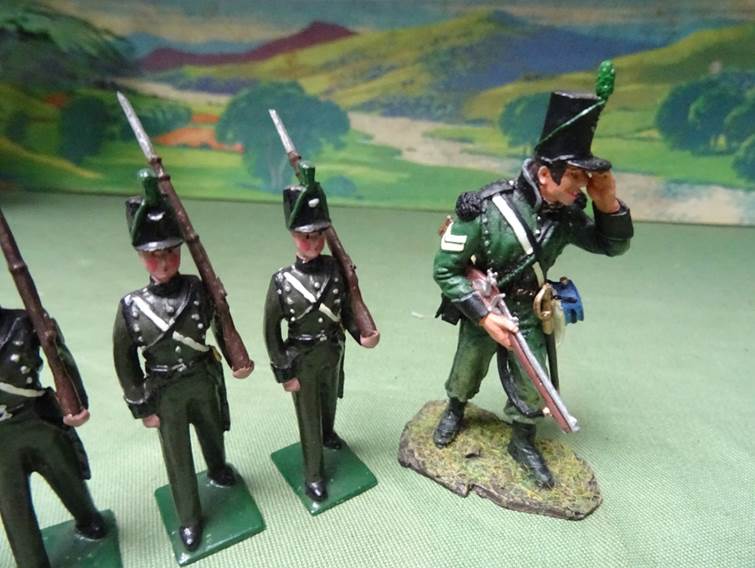
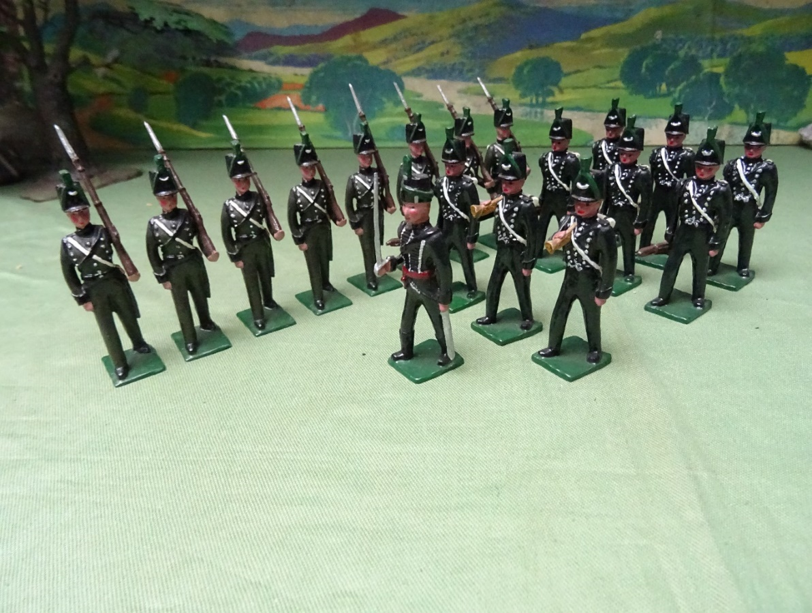
16. Although under the pressure of the Nostalgia contract, Jan and Frank managed to issue the first version rifleman in 1974, and the second version in mid-1976. Neither sold well, and so in common with the French Imperial Guard are among the rarest Blenheim figures. I managed to persuade the Scrobys to change the rifleman stance to the carry, but I fear it made no difference. The Rifles had bugles rather than colours.
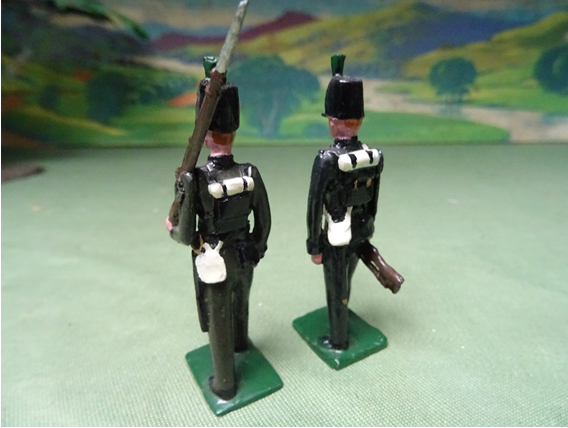
17. The back of the first and second version riflemen.
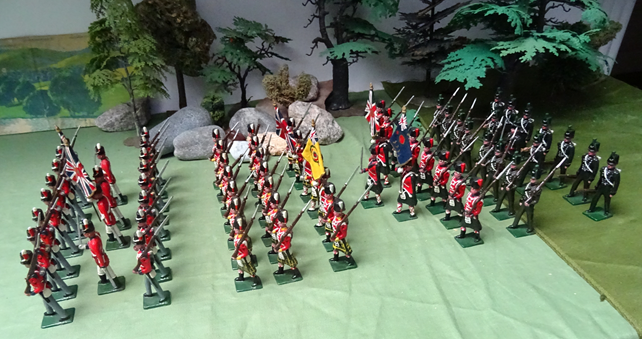
18. The full tally of the four British regiments from Blenheim at Waterloo.
19. The enemy! The first version of Napoleon’s Grenadiers of the Old Guard.
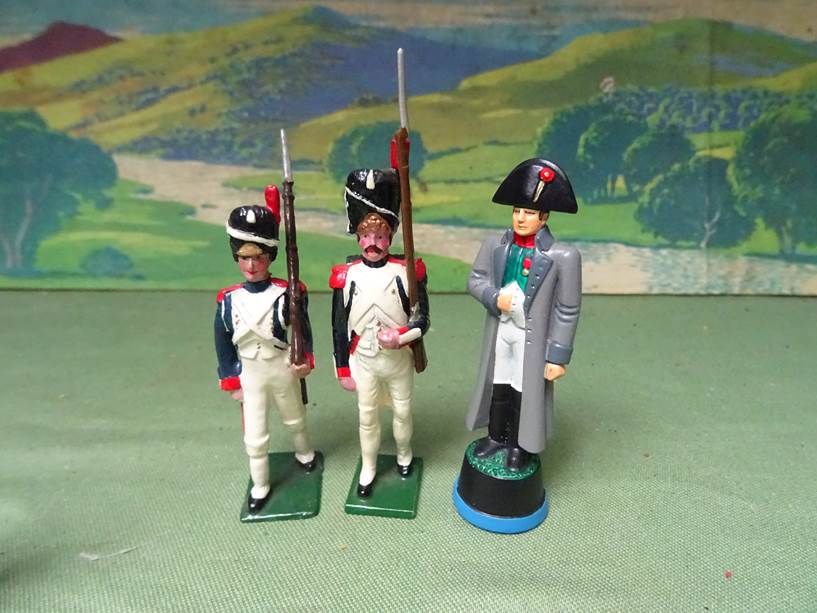
20. Comparing a Blenheim Guard with one by Tradition and Napoleon, who being short is on a small podium.
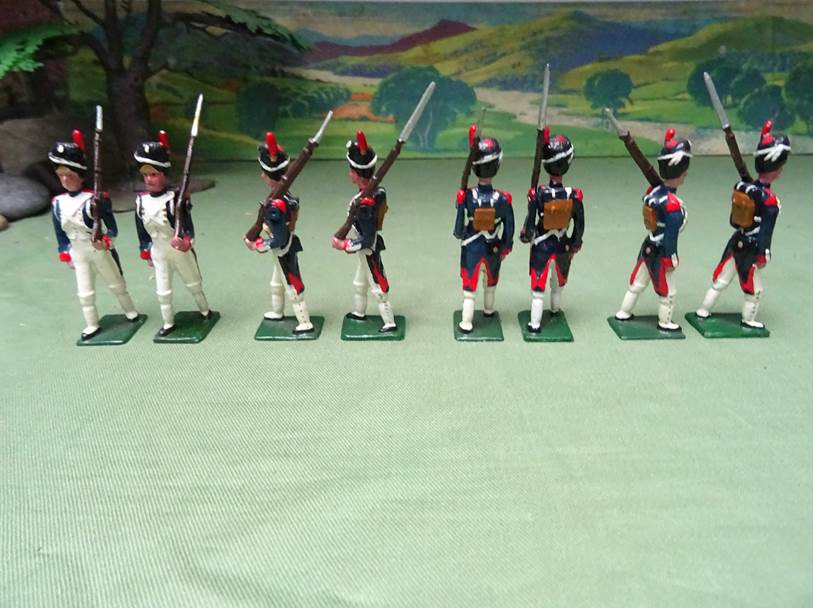
21. All round comparison of the Imperial Guard, first version to the left.
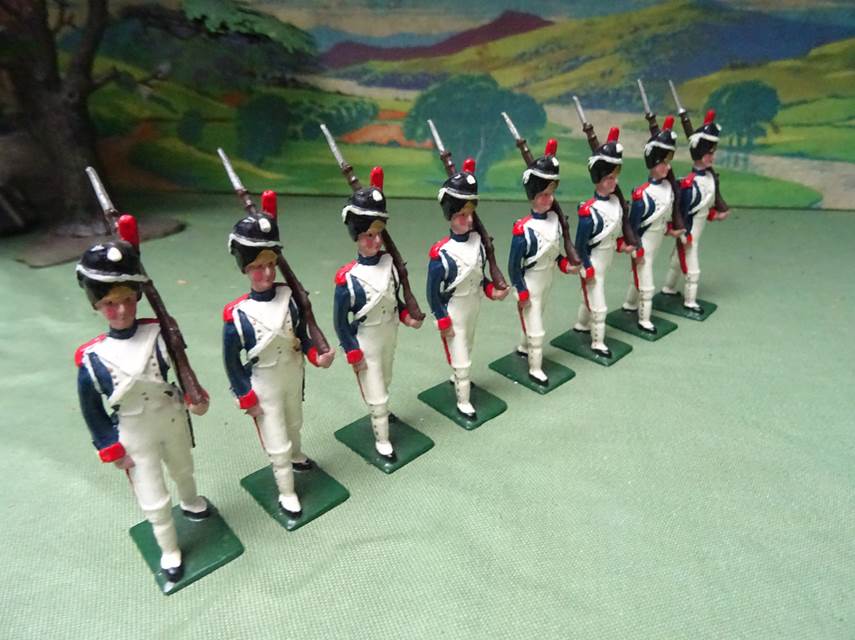
22. Imperial Guard, both versions, in column.
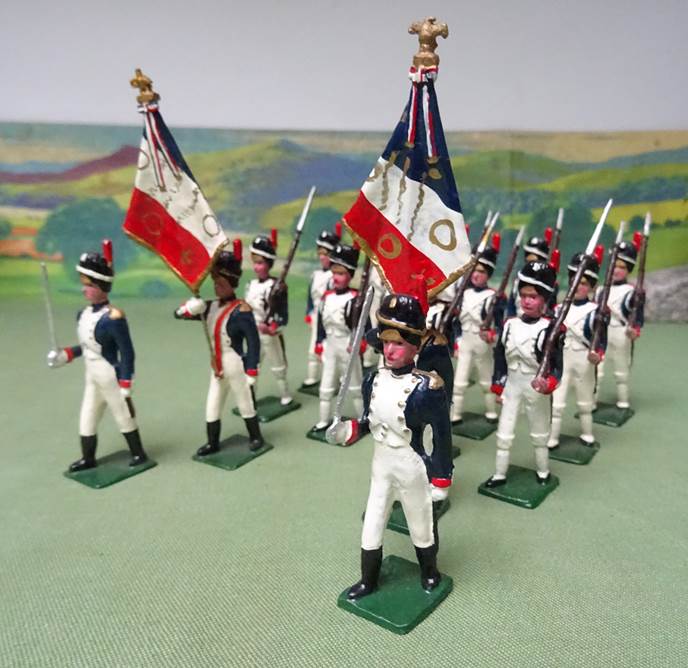
23. Imperial Guard, both versions, in line.
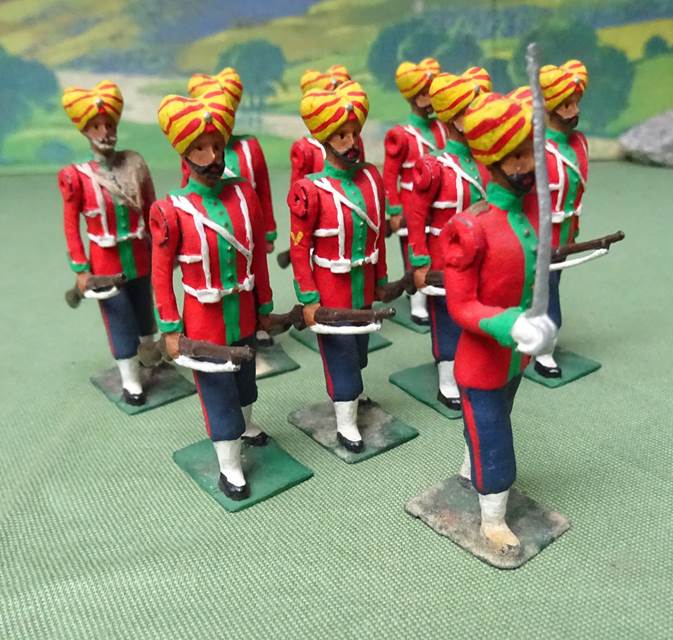
24. 15th Ludhiana Sikhs, the rare matt finish version at the trail.
25. Nearly all the versions of the Ludhiana Sikhs, the only one missing is the marching at the slope without the Nostalgia added quoit.
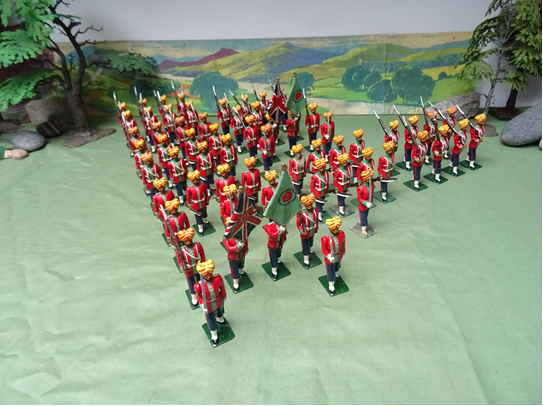
26. The Ludhiana Sikhs on parade.
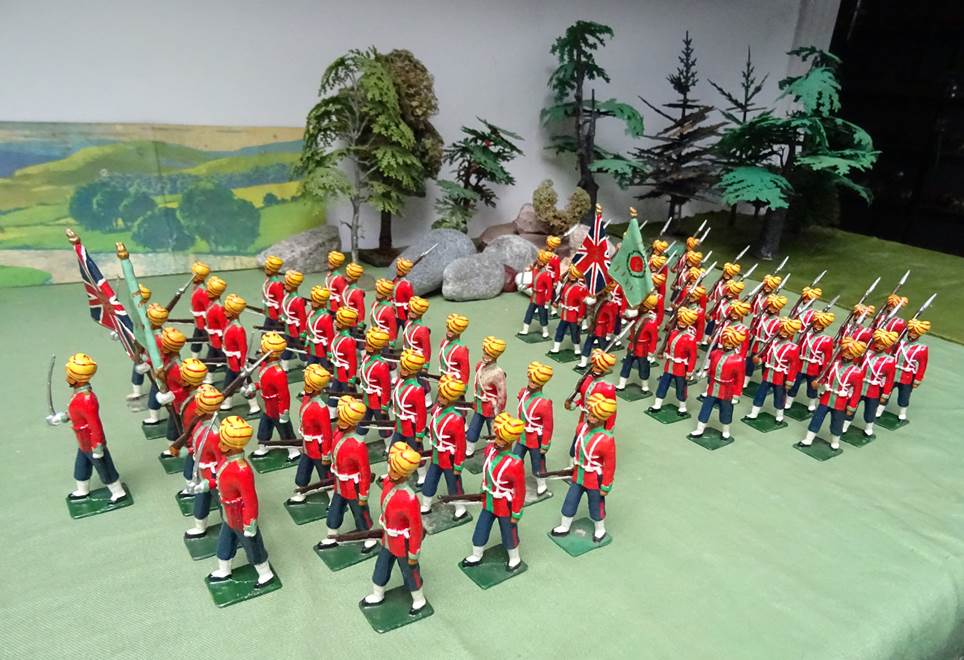
27. Types of the Blenheim and Nostalgia Ludhiana Sikh (right to left): Blenheim, at slope with pack, without quoit, at trail without pack, without quoit, officer, matt finish, at trail, matt finish, Blenheim/Nostalgia (no difference) Officer, Regimental Colour, Queen’s Colour, Nostalgia at slope without pack, with quoit, at slope with pack, with quoit.
28. Blenheim’s first cavalry, the Imperial Yeomanry at the halt, with the officer with binoculars. I don’t think that any of their later cavalry ever exceeded the beauty of these quiet, calm figures, trying to find the elusive Boer Commandos.
29. Glyn in his cot. Jan Scroby designed this cot to celebrate the birth of her son, and issued it to her family and friends in a limited edition of twenty-five. I was very proud to have been given one.
30. Glyn in his bed, which came out of his cot.
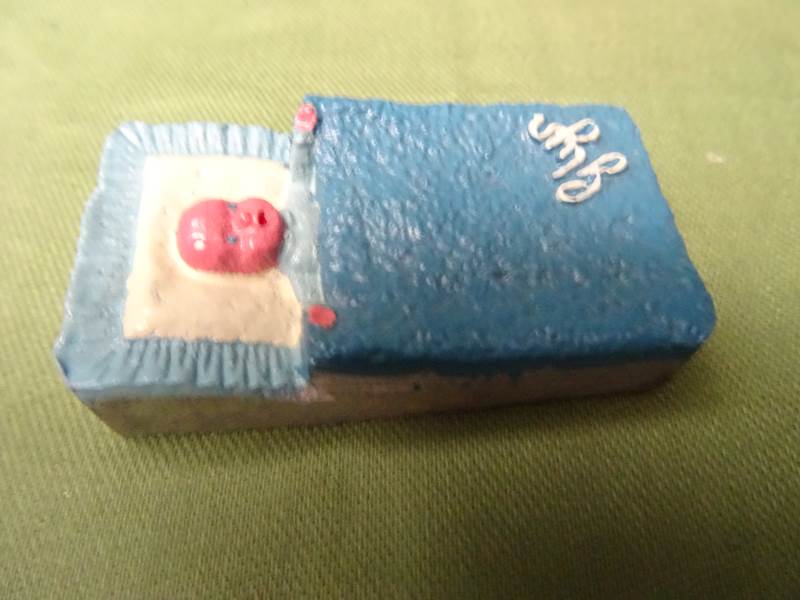
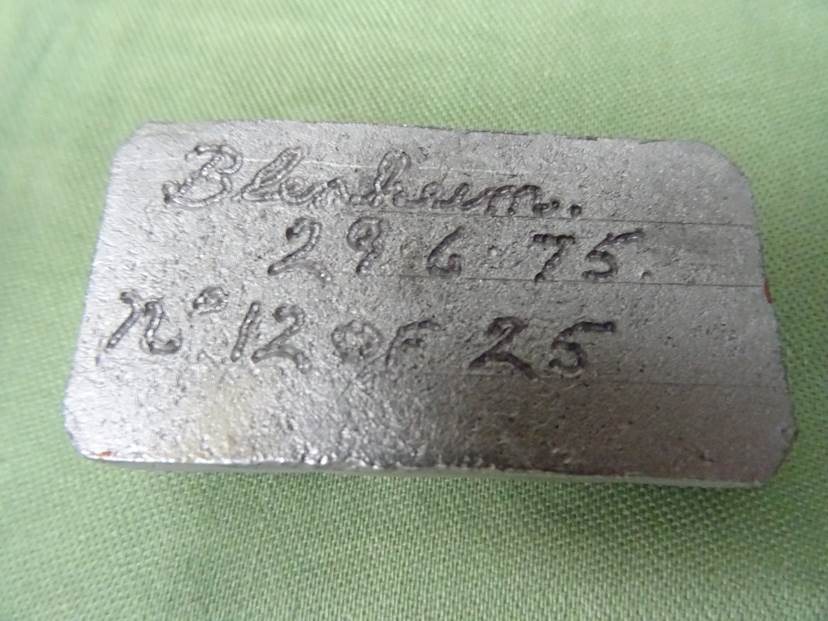
31. The underside of Glyn’s bed, inscribed with his birthday ‘Blenheim. 29.6.75. No.12 of 25’.
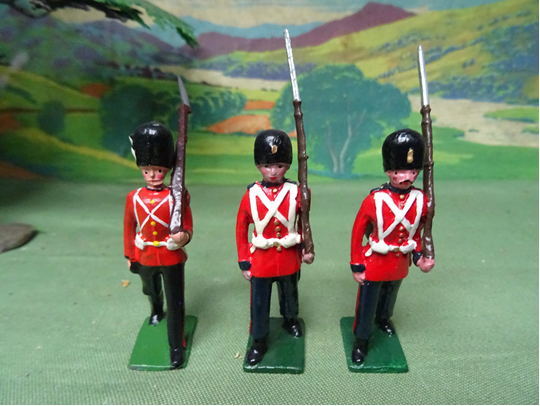
32. Fusilier by Britains with first and second version Blenheim Royal Welch Fusiliers. I was rather upset by the initial fusilier cap designed by Jan, which looked like a crash helmet, and persuaded her to replace it with a better shape of headgear. The result was still smaller than the Britains one, a first for Blenheim.
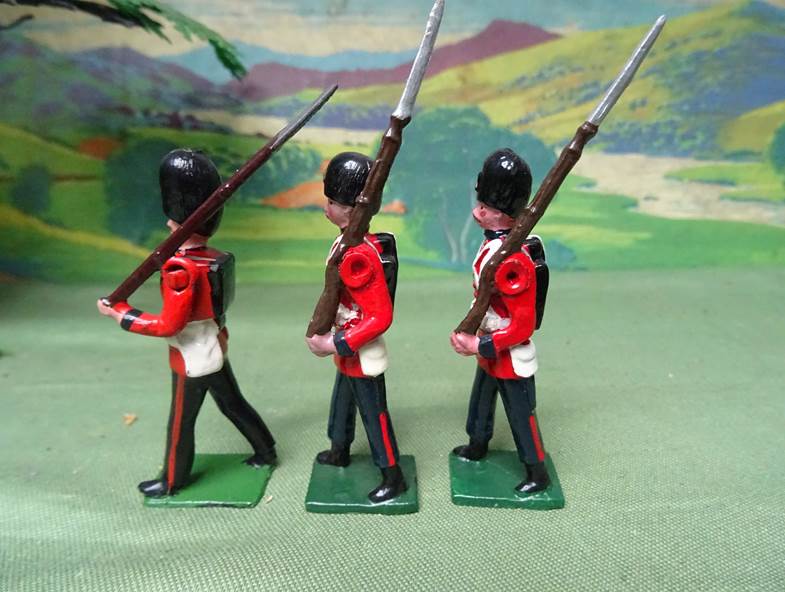
33. Royal Welsh Fusiliers from the front.
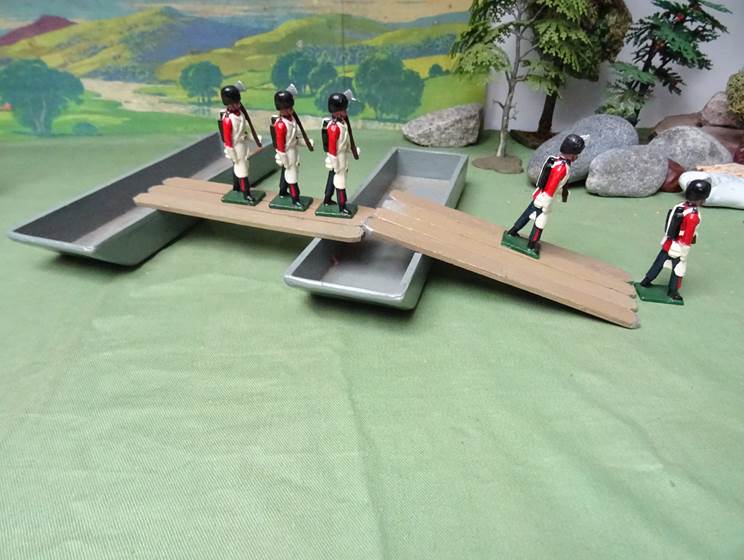
34. Blenheim Pontoons, Planks and Pioneers. The prototype pontoons were of thick metal, and eventually were issued in wood. The metal planks were to go in the bed of the pontoon wagon, underneath the boat. I am not sure if that eventually happened or not. The pioneers are first version, with axes.
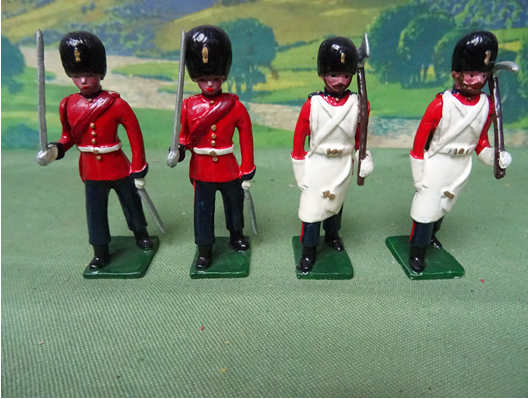
35. Blenheim Royal Welch Fusilier officers and pioneers, first versions on the left. The second version pioneers were equipped with axes, spades and pickaxes.
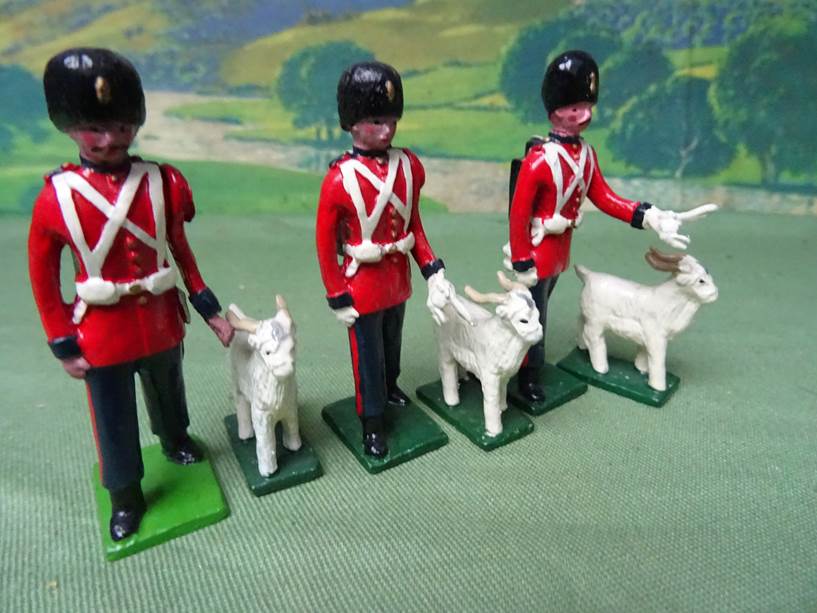
36. Blenheim Royal Welsh Fusilier mascot goats and handlers. On the left of the first and second versions is a prototype handler with an officer head and an empty handed arm, note also the abnormal colour of the base.
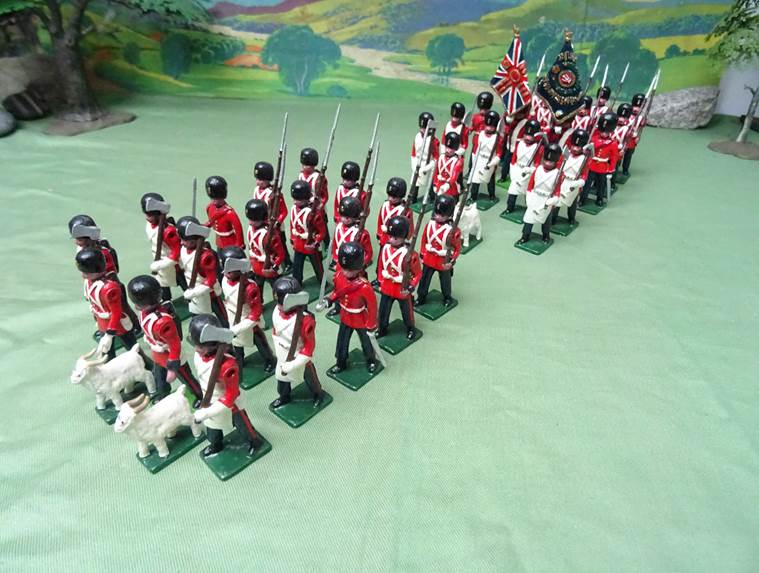
37. Blenheim Royal Welch Fusiliers, the first version preceding the second version.
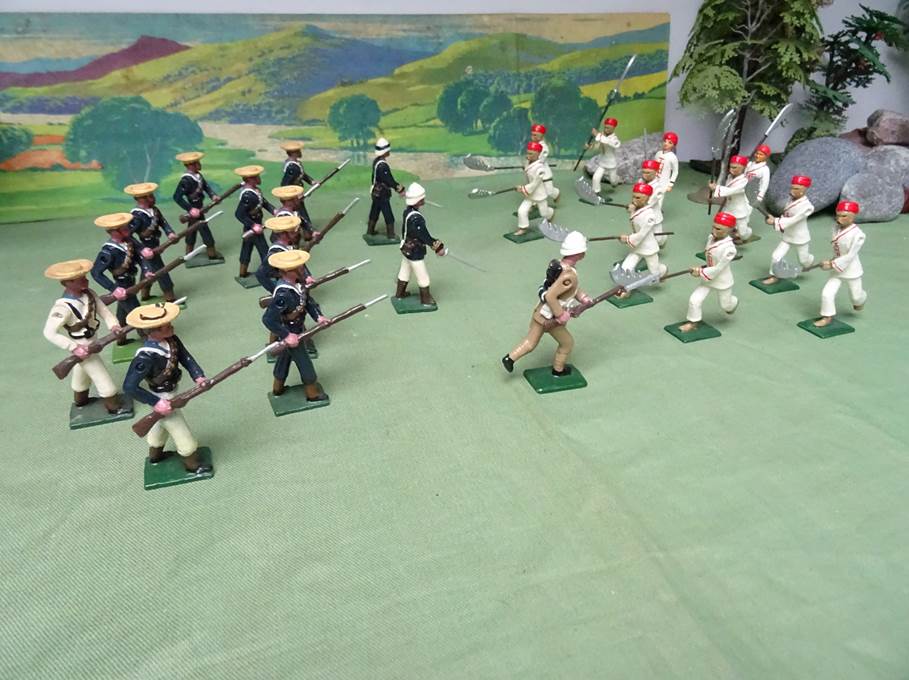
38. Imperialist British sailors and Boxers that I commissioned from Blenheim.
39. Imperialist Manchus with officers, colour bearers and bannermen with umbrellas and pikes.
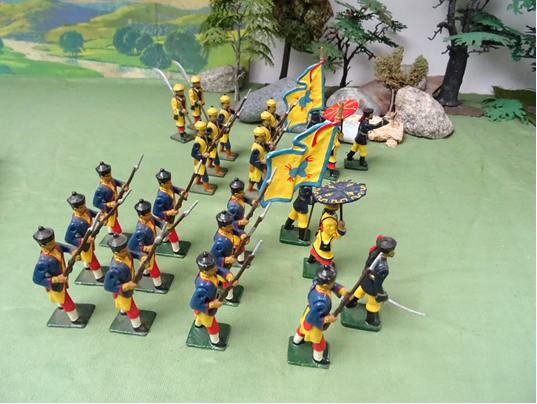
40. Imperialist Chinese, a grand panorama.
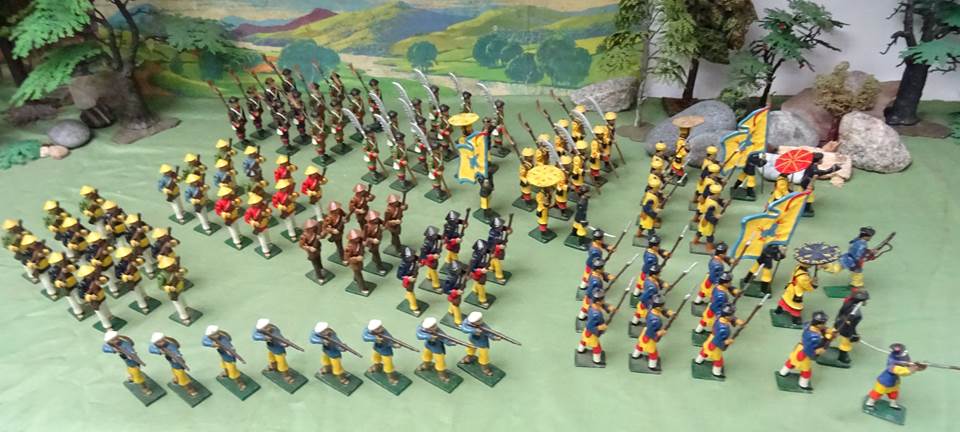
41. Imperialist Chinese, detail
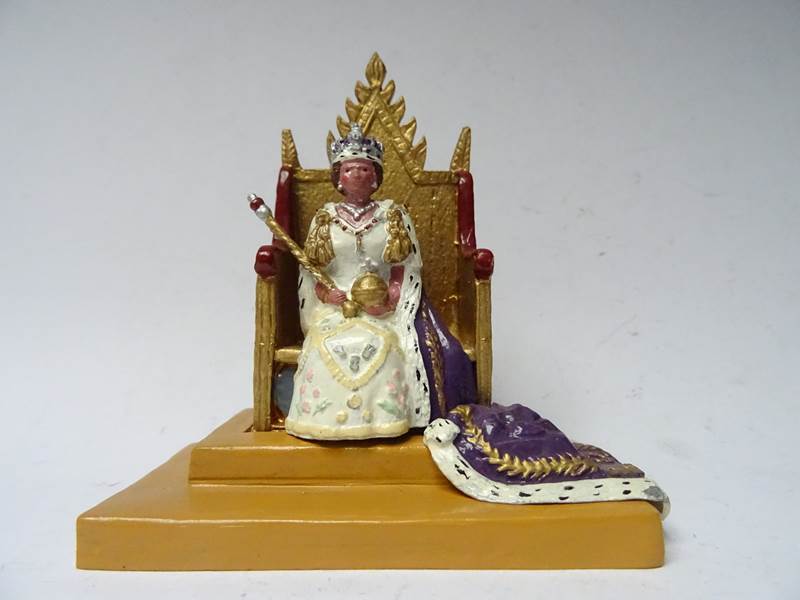
42. Queen Elizabeth II on throne, in coronation robes
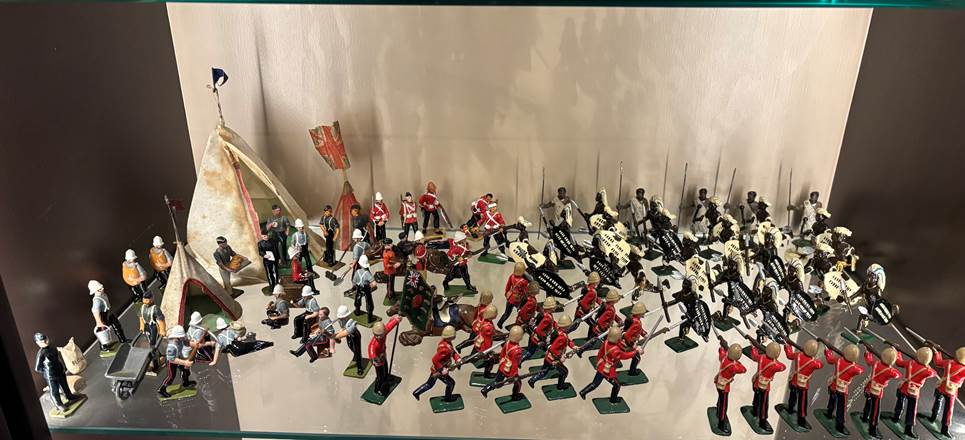
43. A dioramic layout of the battle of Isandlwana during the Zulu War. The running Zulus and the British infantry in brown helmets are by Blenheim (except the one at the back). The army baker to the back left is also a Blenheim figure.